
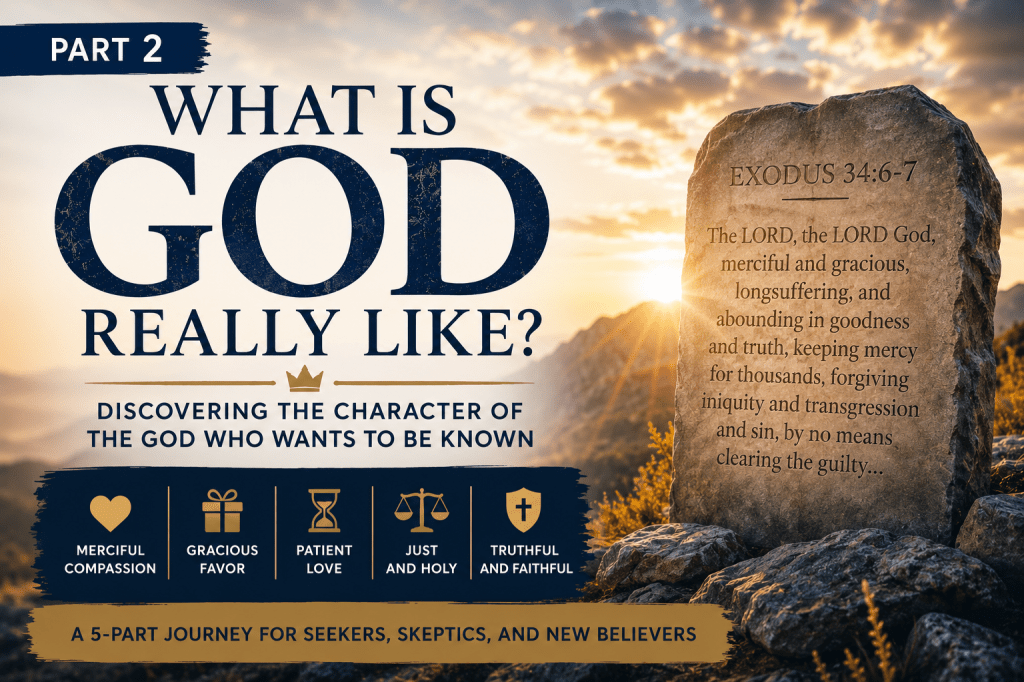
Discovering the Character of the God Who Wants to Be Known
Key Scripture
Exodus 34:6-7 (NKJV)
“And the LORD passed before him and proclaimed, ‘The LORD, the LORD God, merciful and gracious, longsuffering, and abounding in goodness and truth, keeping mercy for thousands, forgiving iniquity and transgression and sin, by no means clearing the guilty…’”
Introduction
In Part 1, we explored one of life’s biggest questions: Does God exist and can we know Him?
We discovered that God has revealed Himself through creation, through His Word, and ultimately through Jesus Christ.
But knowing God exists naturally leads to another important question: What is God actually like?
This question matters because many people reject a version of God that doesn’t exist. Some picture God as angry and waiting to punish people while others imagine Him as distant and uninterested.
Some believe He is merely a force or energy, or they create a god who agrees with whatever they already believe.
The truth is that our opinions about God do not determine who He is because God has already revealed Himself. And if we want to know what God is like, we must allow Him to speak for Himself.
Thankfully, there is a passage in Scripture where God does exactly that which is why it is the foundational passage of our series.
In Exodus 34:6-7, God gives what many scholars call His “self-revelation” or “self-description.” Rather than allowing humanity to guess about His nature, God tells us who He is.
This passage becomes one of the most quoted descriptions of God throughout the rest of the Bible. If believe that if you want to understand God’s character, this is one of the best places to begin.
Why Understanding God’s Character Matters
Our view of God affects every part of life. It affects how we pray and how we respond to suffering. It also affects how we understand forgiveness and whether we trust Him.
Most importantly, it affects whether we pursue a relationship with Him. I have seen people walk away from faith because they misunderstand who God is. Others can spend years fearing a God they do not truly know.
The more accurately we understand God, the more clearly, we understand ourselves, our purpose, and our need for salvation.
Before we examine God’s description of Himself, we need to understand the setting in which these words were spoken.
Exodus 34:6-7 Explained
The events leading up to Exodus 34 are both heartbreaking and hopeful. God had delivered Israel from slavery in Egypt through miraculous acts of power. I am sure you know these acts, like parting the Red Sea, providing food in the wilderness.
He established a covenant with His people.
Yet while Moses was on Mount Sinai receiving God’s law, the people became impatient. Instead of trusting God, they created a golden calf and worshiped it. The nation had committed spiritual adultery and they are now rejecting the God who had rescued them.
The people deserved judgment but yet Moses interceded on their behalf. As we see in Exodus 33, Moses makes a remarkable request:
“Please, show me Your glory.” (Exodus 33:18 NKJV)
God responds by revealing His glory.
But notice how He does it.
God does not primarily reveal His glory through displays of power. He reveals His glory through His character and the first thing God wants Moses to know is who He is. The same is true for us today.
As we interpret the verses below notice that each segment provides us what we need to truly know who He is.
“The LORD, the LORD God”
God begins by identifying Himself. The name “LORD” (YHWH) emphasizes God’s eternal existence and covenant relationship with His people. God is not a distant force. He is personal and He knows His people and desires to be known by them. The repetition highlights the importance of what follows.
God wants Moses to pay close attention.
“Merciful”
The Hebrew word carries the idea of deep compassion. It describes a loving concern for those who are hurting, weak, or in need. God is not indifferent to human suffering because He sees it and He cares.
Throughout Scripture we see God repeatedly showing mercy to people who have failed. This is good news because every one of us has failed.
“Gracious”
Grace is receiving what we do not deserve. God blesses people not because they have earned His favor but because of His goodness. I can’t stress this enough that the greatest expression of grace is salvation through Jesus Christ.
None of us can earn forgiveness. None of us can earn eternal life.
Both are gifts from God.
“Longsuffering”
This means patient and slow to anger. Think about how patient God was with Israel and how patient God has been with humanity throughout history. Think about how patient He has been with you.
God does not delight in judgment because He desires repentance and restoration.
His patience demonstrates His love.
“Abounding in Goodness”
God’s goodness is limitless. Listen up, He is not occasionally good. He is perfectly good. Everything He does flows from His holy character.
Even when we cannot understand our circumstances, we can trust God’s goodness. His character never changes.
“And Truth”
God never lies and never deceives. He also never breaks His promises.
In a world filled with uncertainty, God’s truth remains constant. What He says is trustworthy and what He promises is certain.
His Word can be relied upon completely.
“Keeping Mercy for Thousands”
God delights in showing mercy.
Notice the emphasis.
God’s mercy extends far beyond a single person or generation because His compassion reaches farther than we can imagine.
This does not mean everyone is automatically saved but it does mean that God’s desire to show mercy is immense.
“By No Means Clearing the Guilty”
I know that this statement may surprise many people.
After hearing about God’s mercy and grace, we encounter His justice.
God is loving, merciful and gracious but God is also holy and just.
A good judge cannot ignore wrongdoing. Likewise, God cannot simply overlook sin. Then this now creates an important question: How can a holy God forgive guilty people?
The answer is found in Jesus Christ.
At the cross, God’s justice and mercy meet together. Jesus took upon Himself the punishment that sinners deserve so that forgiveness could be offered without compromising God’s holiness.
The cross reveals both God’s love and His justice.
What This Passage Teaches Us About God
- God Is Personal
- He desires a relationship with people.
- God Is Compassionate
- He cares deeply about human suffering.
- God Is Gracious
- He gives what we do not deserve.
- God Is Patient
- He gives people opportunities to repent and turn to Him.
- God Is Good
- His character is perfect and trustworthy.
- God Is Truthful
- Everything He says is reliable.
- God Is Forgiving
- No one is beyond His grace.
- God Is Just
- Evil and sin will not go unanswered.
What This Passage Teaches Us About Jesus
Everything God reveals about Himself in Exodus 34 is fully displayed in Jesus Christ.
When Jesus healed the sick, we saw God’s compassion.
When Jesus forgave sinners, we saw God’s grace.
When Jesus patiently taught His disciples, we saw God’s longsuffering.
When Jesus spoke truth, we saw God’s truthfulness.
When Jesus died on the cross, we saw God’s justice and mercy meet together.
Jesus is not merely a messenger from God, He is the perfect revelation of God.
As Jesus declared:
“He who has seen Me has seen the Father.” (John 14:9 NKJV)
If you want to know what God is like, look at Jesus.
How can this be applied?
1. Allow Scripture to Define God
Do not build your understanding of God on culture, opinions, or experiences alone. Allow God’s Word to reveal who He truly is.
2. Receive God’s Grace
You do not need to clean up your life before coming to God. Come to Him as you are and remember that His grace is greater than your failures.
3. Trust God’s Character
When life is confusing, remember what God has revealed about Himself. His character remains constant even when circumstances change.
4. Look to Jesus
If you ever wonder what God is like, look at Jesus Christ.
He is God’s clearest revelation to humanity.
Some questions to reflect on!
- Which attribute of God is most encouraging to you right now?
- Has your understanding of God been shaped more by Scripture or by personal experiences?
- Why is it important that God is both loving and just?
- How does Jesus help us understand God’s character?
- What area of your life needs to be surrendered to God’s grace?
Coming Next
Part 3: If God Is Good, Why Is the World Broken?
If God is loving, merciful, and all-powerful, why do suffering, evil, death, and pain exist? In Part 3, we will explore humanity’s greatest problem, the reality of sin, and why the world is not the way God originally intended it to be.
 GRATEFUL JOURNEYS!
Leave a comment